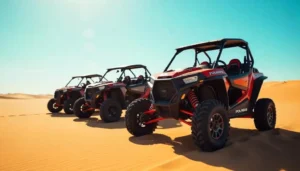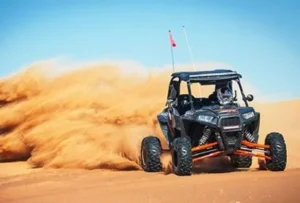

Have you ever been in a position to enjoy life and keep it eternally simultaneously? This is just what travellers feel when on an adrenaline-filled dune buggy ride in Dubai. The engine roars, the dunes are golden to the horizon, and drifting down the ridges of sand is an adrenaline-filled experience that is special in a way that it is hard to forget. However, it is often not so easy to film such experiences. Sandscapes are deceptive, and dune buggy speed can complicate the photography process even further. Which is why the art of dune buggy Dubai photography enters the picture. You may freeze not only a movement but also an emotion of your adventure with the appropriate knowledge, methods, and tools. In this article, I will provide the best desert photography tips to capture evidence of what your dune buggy ride experienced like a good photographer, irrespective of which type of camera you are using, a DSLR, an action camera, or even your phone.
Why Desert Photography is Unlike Any Other
There is no middle ground in a desert; it is one of the most interesting but challenging photography locations to work in. There is the natural canvas that is the sand itself, which is continuously reshaped by the wind, and there is the effect of the sunlight, which plays on the dunes and comes off as very dramatic, which is difficult to recreate anywhere. But then, with this beauty, one must overcome challenges. The portraits of midday sun are very likely to wash out your shots, and the bright surfaces of the dunes are likely to overexpose your shots unless treated appropriately. The skies may turn out to be clear in one minute and hazy with golden light in the other. The shadows that result are your assistant in imparting a third dimension and narrative to photos. This is one of the reasons dune buggy Dubai photography is so fascinating, because of this continual change. Each shot is somehow different, and each frame has a character.
Choosing the Right Gear for Your Adventure
What you need to get the spirit of a dune buggy adventure is equipment to suit the dynamic environment. Proficient photographers would suggest a DSLR or mirrorless camera since they have versatility and are able to show action in motion. In case you need to be able to incorporate flexibility into the action, a GoPro or other action camera could be attached to your buggy and become a part of immersive filming that will follow you everywhere. Smartphones now have the sophistication to the level that they can be used to capture desert scenes effectively, only if one uses the manual mode and thinks about exposure setups.
The lenses one uses will alter the mood of the images entirely. A wide-angle lens can take in huge swathes of desert scene to portray their expanse, whilst a telephoto lens can come in handy to capture trails of flying sand and details of fluidity. To make the most out of your camera, you should purchase a prime 50 mm lens that can produce clarity of faces and create a background of softened desert light. Regardless of the equipment you are carrying, you must not expose it to sand and dust. Having lens filters, a microfiber cloth, and a protective covering for your camera will ensure breaks are avoided and shots are not hampered.
Mastering Camera Settings in the Desert
Dune buggy photography is a beautiful art to capture a movement with a background that seems limitless, yet has a life of its own. In order to achieve this, you should get command of your camera settings. The most crucial when shooting moving cars is the shutter speed. The quicker shutter speeds, like 1/1000 second, would be ideal in capturing a dune buggy in mid-air jumping or throwing on a dust cloud. Conversely, a slower shutter speed, perhaps 1/60 of a second or lower, taken with some pan of your camera, will produce an amazing feeling of speed as the motion of the buggy is blurred.
There is also the role of aperture. To capture the scene of the landscape and the buggy both, a narrower aperture between f/8 and f/11 will make sure that even the minutest details, such as the ridges of the dunes and the buggy itself, appear sharp. But, in case you are interested in the blurred background only and you want to concentrate merely on the buggy, the opening f/2.8 would be just perfect. ISO, in its turn, is to be maintained at the lowest levels throughout the day, which is typically 100-400, to prevent noise. At the time you would want to take the present picture, the sun is going down, and so it might be necessary to raise the ISO a notch higher, but you must balance out the brightness to maintain the clarity of the picture.
The Best Times to Capture Dune Buggy Dubai Photography
Lighting is the making or breaking factor in desert photography. Capturing at the correct hours in the day can take an ordinary photograph and turn it into a masterpiece. The early morning is a great time to shoot because of the softer golden hues, reduced temperature, and easier and comfortable photography. The magical light produced in Sunrise causes long shadows and light highlights, bringing depth to the dunes.
It is preferable, however, to do this in the evening. After an all-day day of sunburnt sand, that luminous sunset terrain of red, orange, and purple colors paints the desert. It is also the ideal time to show silhouettes of dune buggies scaling mounds behind an incinerating hued skyline. Spending a night out there and trying the desert photography is also a good idea when one is in search of the extraordinary. The panorama will grant you fantastic astral photos with minimal or no light pollution to reduce glare in the skies, giving you the view of a star-laden night.
Desert Photography Tips That Work Every Time
Desert shooting is not merely technical but also creative. Tire tracks in the sand are some of the more obvious leading lines that naturally pull the viewer into the frame and give a sense of direction. Shadows. An additional element is the shadows, the dunes create dramatic shapes that contribute to the effects of depth and dimensions that photos have. Having a human figure in the picture, which is a person driving, makes it easier to convey the sense of scale, reminding the viewers that indeed the desert is enormous. The use of angles could also create some character. The low-angle shot with a flat sand texture provides a rugged sense that cannot be subdued, and to give a wider view of a desert, one can climb a dune and look downward.
Dune buggy Dubai photography is one of the most visually intriguing subjects, as it involves taking images that involve dust trails. Allowing you to capture sand when thrown in the air, a fast shutter speed is a rather dynamic effect. When getting it right, it both expresses the strength of the buggy, as well as the primitivism of the ride.
Smartphones and the Modern Photographer
Not all people take professional equipment to the desert, and it is lucky that smartphones have gained such power that they can be applied to most situations. You simply need to use the advantage of their manual settings. Manual controls of the shutter speed and ISO can assist with the lighting imbalances. HDR mode can usually benefit a shot by balancing the lighting of the bright sky of the darker sand. Stabilization properties are very useful in cases such as filming dune buggy action-packed videos.
The greatest issue of smartphones in the desert is a clutter in lens clutter, which may obstruct the shots. Frequent wiping of the lens is a requirement for clear pictures. Though smartphones might not necessarily meet the features of multiple devices, they easily have the ability to capture the story of your adventure when utilized as such.
Telling a Story Through Your Photos
Photography has to do with not just taking pictures of the moment, but has to do with creating a story. A successful dune buggy album will have a story that you should tell, i.e., build-up to action and then to the restfulness of the desert sunset. You can start with photos of your buggy prior to the ride, and then make a transition into action shots that help elicit the excitement. They should include portraits of the riders, group shots that emphasize the light-heartedness, and finish with wide shots of the horizon of the glowing desert. These desert photography tips and tricks go quite beyond capturing pictures since you are also capturing the entire experience.
Post-Processing for Professional Results
Even the finest photographs can be improved by diligent editing. Correcting the contrast enables one to bring out more the textures of the dunes and make the warm colors stand out because of the presence of the golden glow of the desert. Cropping is also used so that composition can be enhanced as well as to attract attention to the focal point of the frame. They can be used to add character but when in use filters should be used in limited proportions so as to prevent photos coming out in an artificial manner. Editing should be a supplement to your own skills not a substitute, so strive to have an untouched appearance that leaves the beauty of the desert intact.
Conclusion
Dune buggy shooting is more than putting motion in stasis. It is the story of getting fast with the sand and emotion as one. Armed with the appropriate equipment, camera settings and a sense of creativity, photography dune buggy Dubai can be mastered to make momentary scenes memories in time. These desert photography tips will help you take pictures that resonate not only with the events but also the sense of adventure that dune buggy rides in Dubai are known to evoke. Sun to starry night, each click turns to a memory residing in sun-etch of gold.